New aluminium windows and joinery in Christchurch
Aluminium windows are what most Christchurch houses already have, and new aluminium joinery is the usual replacement when the old frames have had it. The big decision is whether to go thermally broken. For the wider picture, start with double glazing in Christchurch.
Get a quoteNew aluminium joinery, or retrofit into what you have?
If your existing aluminium frames are straight, sound and deep enough for a sealed unit, retrofitting double glazing into them costs a fraction of new joinery and gets most of the thermal gain. That's the aluminium double glazing page, and it's where most people should start.
New joinery makes sense when the frames are corroded or twisted, when the profile is too slim to take a unit, when the seals have gone and the window leaks air, or when you want the window to be different: a bigger opening, a slider, a bifold, a different colour. It also makes sense when the frame itself is the complaint. A retrofit leaves a standard aluminium frame as cold as it was, and only new thermally broken joinery fixes the wet sill.
Some installers do both. A good one will go through the house and tell you what each window needs.
Thermally broken aluminium windows, explained
Aluminium conducts heat. In a standard frame the same piece of metal runs from the outside face to the inside face, so on a frosty Christchurch morning the inside of the frame is nearly as cold as the air outside, and the water in the room's air condenses on it. A thermally broken frame is two pieces of aluminium joined by a strip of plastic, so the cold stops at the strip.
The Building Code's reference table puts the difference at R0.24 against R0.30 with standard double glazing, and R0.35 against R0.46 with low-E and argon. Publishers price the thermal break at roughly 25 to 40% over a standard frame. In a city with mild winters you could argue about that premium. With about 85 ground frosts a year here, it's worth paying for, and it settles the question of whether double glazing aluminium is worth doing at all.
Standard aluminium
One piece of metal carries the cold straight through. The inside face runs wet.
Thermally broken
A plastic strip (the thermal break) stops the cold halfway. The inside face stays near room temperature.
Colours, hardware and how windows open
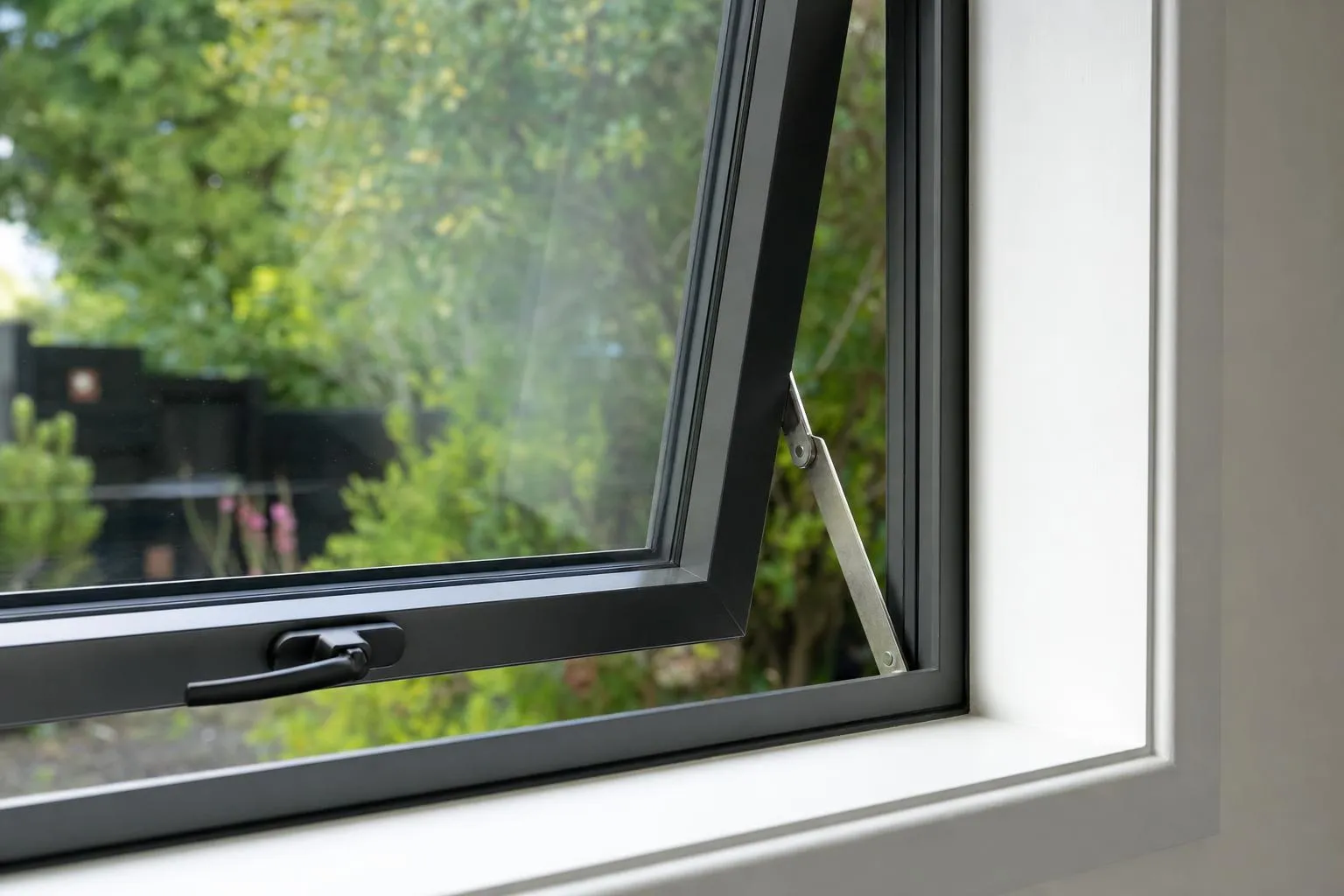
Aluminium takes a powder-coat finish in a wide range of colours, and charcoal and black joinery, which is popular right now, is no trouble in aluminium. Colour costs a little more than plain, roughly 5 to 10% by one publisher's figures, and a different colour inside and out costs more again.
Opening style moves the price more than colour. Fixed and awning windows are the cheapest, then sliding, then bifolds, which are priced per leaf. Sliding doors cost several times a window. If you're replacing anyway, this is the moment to change a casement that never sealed for an awning that does, or to put a slider where the old window faced the deck.
Make sure the quote lists the hardware: the stays, handles and locks, and whether they're the fabricator's standard or an upgrade. Glass in doors and low panes has to be safety glass under NZS 4223.3, and that's usually where the bigger units and the bigger prices are.
Replacing the joinery? Get thermally broken and standard priced side by side
Ask for both on the same windows with the same glass, so you can see what the thermal break actually adds on your house.
What new aluminium windows cost in Christchurch
Published NZ installer pricing for 2026, including GST: about $1,200 to $2,500 per window in standard aluminium and $2,000 to $3,500 thermally broken, or $25,000 to $45,000 and $32,000 to $60,000 respectively for a typical three-bedroom house. Most of the spread comes down to whether the quote includes removal, architraves, gib, paint and cladding repair, so ask. The guide to double glazing costs covers what a quote should itemise, and the replacement windows page covers consent and making good.
- Standard aluminium~$1,200–2,500 / window
- Thermally broken aluminium~$2,000–3,500 / window
- 3-bedroom, standard$25,000–45,000
- 3-bedroom, thermally broken$32,000–60,000
Published NZ installer pricing, 2026, incl GST
Aluminium windows FAQ
How much do aluminium windows cost in NZ?
Published installer pricing for 2026: about $1,200 to $2,500 per window installed in standard aluminium, and $2,000 to $3,500 in thermally broken aluminium, including GST. A three-bedroom house comes to roughly $25,000 to $45,000 in standard frames or $32,000 to $60,000 thermally broken. Sliding doors are priced like several windows. Whether making good is included explains most of the spread.
How much does it cost to replace wooden windows with aluminium?
The same per-window ranges apply, plus the making good, which is larger when timber joinery comes out: architraves, sills, gib and paint inside, and flashings and cladding repair outside. Publishers put an all-in quote 20 to 30% above an installer-only one. Before you do it, look at double glazing the wooden windows as they are too; if the sashes are sound, it's usually much cheaper and the timber frame is warmer.
What are the disadvantages of aluminium windows?
Warmth, mainly. Metal conducts heat, so a standard aluminium frame is the coldest part of the window and the first place condensation forms: the Building Code's reference figures put standard double glazing in aluminium at R0.24, against R0.37 in uPVC and R0.41 in timber. A thermal break closes some of that gap. Against that, aluminium is slim, strong, low-maintenance and comes in almost any colour.
Is aluminium joinery good?
For durability, slim sightlines and low maintenance, yes, which is why most New Zealand homes built since the 1970s have it. For warmth, it's the weakest frame: R0.24 with standard double glazing in the Building Code's reference table, against R0.37 for uPVC and R0.41 for timber. Thermally broken aluminium, at R0.30, is the version to specify in Christchurch if you're staying with aluminium.
Get new joinery priced for your house
They'll measure on site and put the frame and glass details in writing.