uPVC windows and double glazing in Christchurch
uPVC windows are the warm-frame option for a house that needs new joinery rather than new glass. The frame doesn't conduct heat the way aluminium does, so the whole window performs better and the frame stays dry on a frosty morning. For other options, see double glazing for Christchurch homes.
Get a quoteWhat uPVC windows are
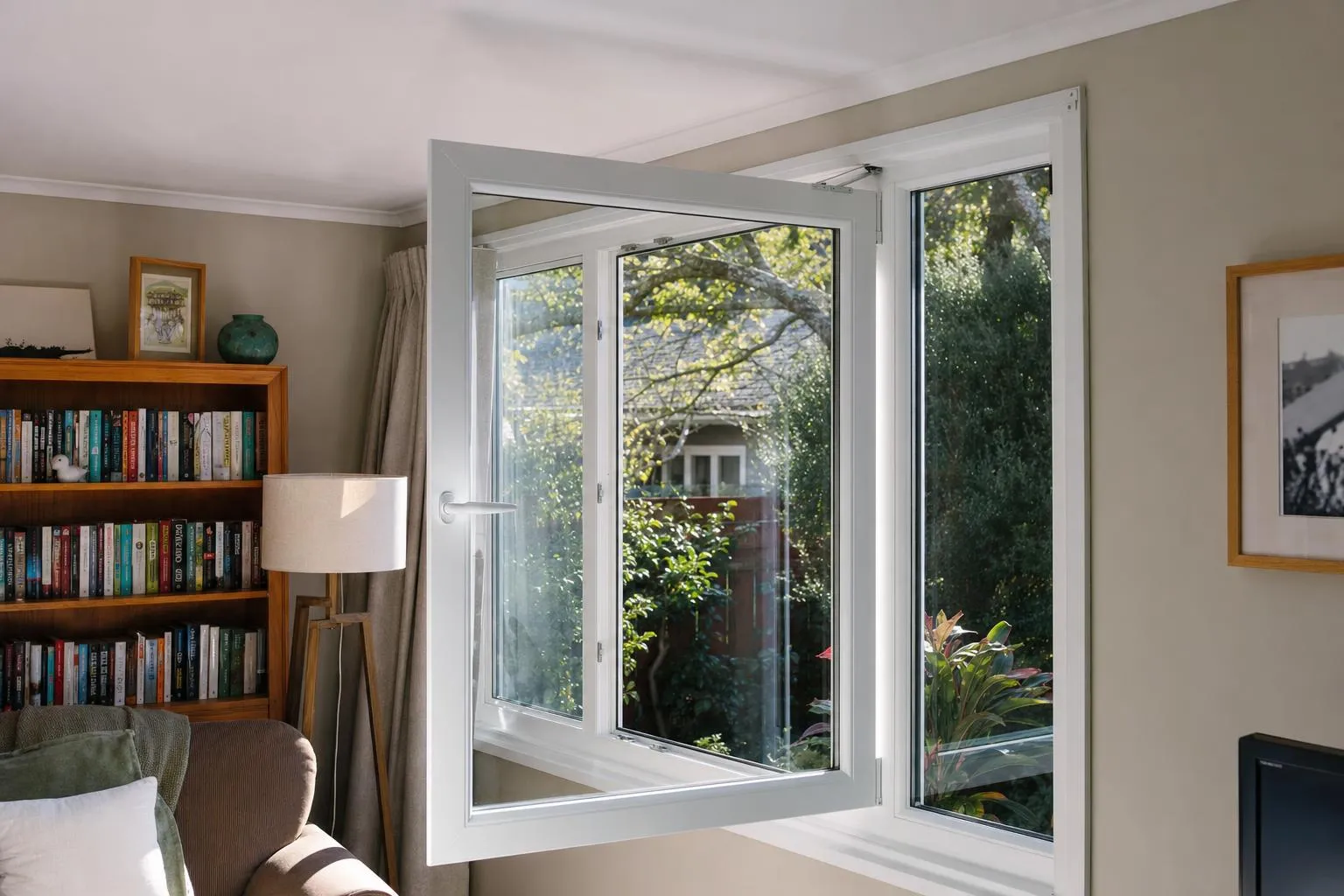
Unplasticised polyvinyl chloride: a rigid plastic frame, extruded in hollow multi-chamber profiles with steel reinforcing inside where the window needs stiffness. The chambers trap air and the plastic doesn't carry heat, and that's what keeps the heat in. The usual opening style is tilt-and-turn, where the sash tilts in at the top for airing or swings open fully for cleaning, though awning and sliding styles exist too.
It's the standard window frame across much of Europe and still the minority option in New Zealand, where aluminium has dominated since the 1970s. That's changing. EECA's advice on replacement frames favours uPVC or timber over aluminium for lower heat loss and less condensation, and the Building Code's own reference figures back it up.
uPVC vs aluminium windows (and timber): the numbers
| Frame | Standard double glazing | Low-E and argon | Frame condensation | Upkeep |
|---|---|---|---|---|
| Standard aluminium | R0.24 | R0.35 | Runs wet in a frost | Wash down |
| Thermally broken aluminium | R0.30 | R0.46 | Much reduced | Wash down |
| uPVC | R0.37 | R0.63 | Rare | Wash down |
| Timber | R0.41 | R0.71 | Rare | Paint |
Whole-window R-values from the Building Code's H1/AS1 reference table. Higher is warmer. Single glazing in a timber frame is about R0.19, so any of these is a large step up.
There are two ways to look at that. Against standard aluminium, a uPVC window with the same glass is roughly 50% warmer. Against thermally broken aluminium, the gap is smaller and the price comparison is unclear, which is the real decision most Christchurch buyers face. Only timber beats it on paper, and timber needs painting.
uPVC in a Christchurch winter
Christchurch gets a lot of frost. There are about 85 ground frosts a year, July nights average a low of 0.7°C, and on still winter nights the cold settles in. The question people ask on local forums, over and over, is whether double glazing in a standard aluminium frame is even worth doing here, or whether the frame has to be warm too. uPVC is one of the two answers to that (the other is thermally broken aluminium).
In practice, the frame stays close to room temperature, so it doesn't sweat along the sill. The multi-chamber profile and tilt-and-turn sash close tightly, which stops draughts. And plastic doesn't carry sound the way a thin metal frame can. Christchurch owners who've fitted tilt-and-turn uPVC throughout tend to mention the quiet as much as the warmth.
The trade-offs
- Profile size. uPVC frames are thicker than aluminium. That means less glass in the same opening and a chunkier look, which suits some houses more than others.
- Colour. White is standard. Coloured and woodgrain foils exist and cost more. Publishers put colour at roughly 5 to 10% extra.
- Imports and lead times. Most uPVC joinery is imported, so prices move with freight and exchange rates and lead times can be long. Ask.
- Sun and durability. Christchurch buyers ask whether uPVC holds up under New Zealand UV. Ask the supplier which profile it is, where it's made, and what the warranty on the frame says about fading and distortion. Get that in writing.
- Fewer installers. Aluminium is what most joinery shops here do. Choose an installer who fits uPVC regularly, and ask to see a job they did a few winters ago.
Weighing uPVC against thermally broken aluminium?
Ask for both to be priced on the same windows with the same glass, so you're comparing like with like.
What uPVC windows cost
This is the one frame this site doesn't put a per-window price on. The published NZ figures for 2026 disagree by two to four times, and they can't agree whether uPVC sits above or below thermally broken aluminium. What we can say is that standard aluminium is cheaper, timber is dearer, and a whole three-bedroom house in thermally broken aluminium or uPVC is published at about $32,000 to $60,000 including GST. The double glazing cost guide explains why the ranges are so wide and what a quote has to itemise. The replacement windows page covers consent and what's included.
- uPVC, per windowNot published
- 3-bedroom, thermally broken or uPVC$32,000–60,000
- Standard aluminium, for comparison~$1,200–2,500 / window
Published NZ installer pricing, 2026, incl GST
uPVC windows FAQ
What does uPVC stand for?
Unplasticised polyvinyl chloride: a rigid plastic that, unlike the softer PVC used in pipes and cable, has no plasticisers added. For windows it's extruded into hollow, multi-chambered frames with steel reinforcing where stiffness is needed. uPVC double glazing is simply a sealed double glazed unit in one of those frames.
What is the disadvantage of uPVC windows?
The frames are chunkier than aluminium, so you lose a little glass area and the look is different from the street. Colour choice is narrower, and coloured or woodgrain finishes cost more than white. Most uPVC joinery in New Zealand is imported, so lead times and prices move with freight and exchange rates. And it's less common here than aluminium, so fewer installers work with it and fewer neighbours can tell you how theirs has aged.
How much do uPVC windows cost in NZ?
This site doesn't publish a per-window figure for uPVC, because the published sources disagree by two to four times and can't even agree whether uPVC sits above or below thermally broken aluminium. For a whole three-bedroom house, published 2026 pricing puts thermally broken aluminium or uPVC at about $32,000 to $60,000 including GST. The only way to know for sure is to get it quoted.
Which is cheaper, aluminium or uPVC?
Standard aluminium is cheaper than uPVC. Against thermally broken aluminium, the published figures conflict: two publishers put uPVC between standard and thermally broken, one Christchurch installer puts it above. uPVC is the warmer frame of the two, R0.37 against R0.30 with standard glass, so compare the quotes on warmth as well as price.
Get uPVC priced for your house
The installer measures on site and writes down exactly which frame and glass you're getting.